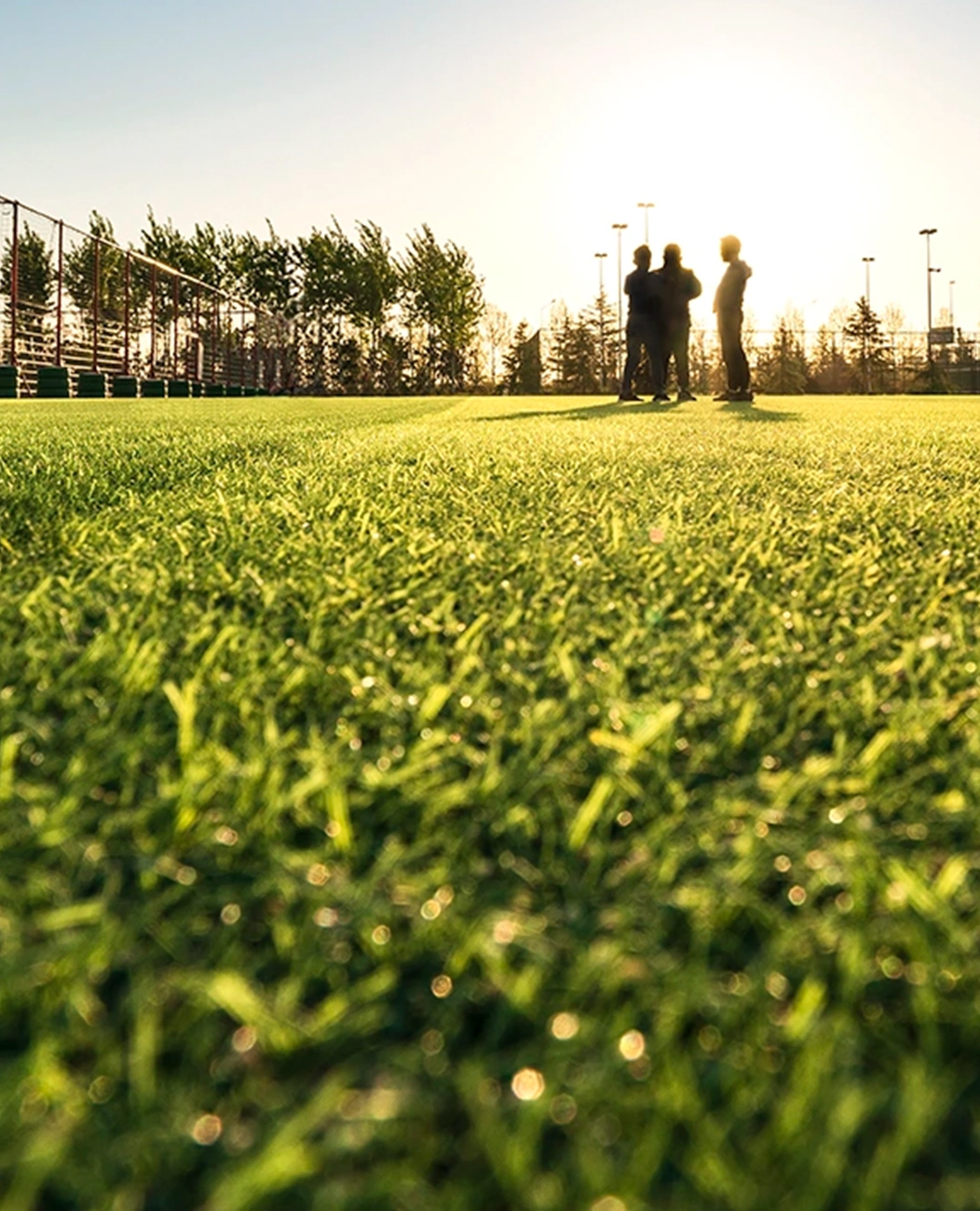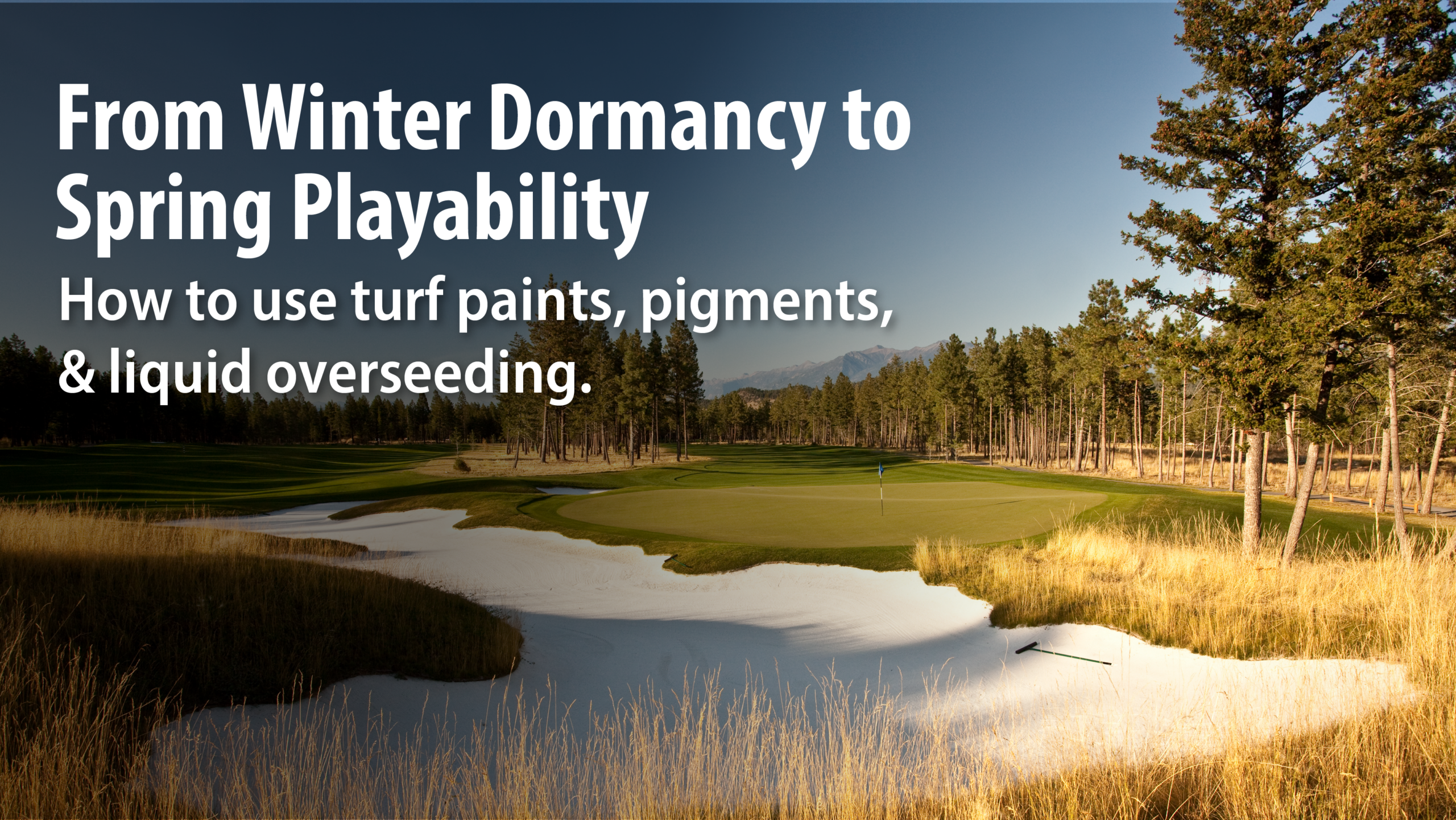
Every winter, golfers head south in search of green playing surfaces. For facilities managing warm-season turf, that demand for color has traditionally meant overseeding with a cool-season grass. While effective, traditional overseeding interrupts play, increases costs, and often complicates the spring transition back to bermudagrass.
Challenges of the “Traditional” Way
- Cool, wet springs and increasingly persistent overseeded grasses have made that spring transition more difficult. Prolonged cool weather can delay bermudagrass green-up, creating competition, thinning, and inconsistent playing conditions. As a result, many facilities are rethinking overseeding altogether.
A New Toolkit
- Modern turf paints and pigments provide a practical alternative. They do far more than simply masking dormant grass, Today’s colorants deliver agronomic, operational, and sustainability benefits that extend well beyond aesthetics. When paired with liquid overseeding strategies, they allow superintendents to deliver consistent green color, protect turf through winter stress, and set up a smoother, more predictable transition into spring.
Colorants are Leading the Shift
Turf colorants have become the leading alternative to overseeding warm-season grasses. Their growing popularity stems from several practical advantages:
- Zero Disruption: Minimal turf disruption and no interruption of play
- Cost Efficient: Lower total cost compared to traditional overseeding
- Faster Green-up: Colorants increase solar heat absorption, warming the soil and waking up the bermudagrass earlier.
- Reduced competition: Eliminates spring competition between ryegrass and bermudagrass.
Paints vs. Pigments: Knowing the Difference
Turf paints: Opaque coatings designed to fully cover the leaf surface and provide long-lasting green color. They are commonly used for dormant warm-season turf, high-visibility areas, severe discoloration or winter injury. Wintergreen™ Plus provides a long-term insulating effect, protecting the plant from excess moisture loss and improved recovery when temperatures return to normal. The dark green, natural color absorbs sunlight to aid the natural green-up process.
Turf pigments: Translucent colorants that enhance and deepen natural color while still allowing the turf’s texture and growth patterns to show through. Envy™ combines pigments with spray adjuvants. It can be applied to turf, trees or shrubs to improve color, mask injury or discoloration and improve the coverage of spray droplets on the leaf blade.
Innovative Formulations with Colorants
Turf colorants are also paired with unique technologies to enhance plant health or maximize control product performance.
- Plant Health: Solarous™ incorporates a reflective technology and spray adjuvants that have proven to be effective at improving moisture retention within the leaf tissue, helping mitigate desiccation from moisture loss.
- Activator Adjuvants: Some pigments also function as activator adjuvants. Activo®, for example, improves spray droplet adhesion, enhances uptake of PGRs, fungicides, herbicides, and insecticides and increases application efficiency while delivering greener turf.
Unlike early-generation products, modern colorants are formulated to adhere well, resist fading, and provide agronomic benefits such as increased heat absorption to support spring green-up, UV protection to reduce winter and early-spring stress and improved spray pattern visibility and application accuracy
As winter gives way to spring, turf paints, pigments, and liquid overseeding strategies provide superintendents with:
- Better visual quality
- Lower costs
- Reduced disruption
- Improved spring transition
- Greater sustainability
When paired with sound moisture management, surfactants, and adjuvant technology, colorants become a true agronomic tool, not just a cosmetic one.