With the current spell of extremely hot, humid weather across the UK and Europe, turf managers should be on high alert for Dollar Spot.
Once considered a relatively minor disease affecting mainly fescue turf, Dollar Spot has become one of the most common summer diseases on golf courses and sports turf. Today it regularly affects fescue, annual meadow-grass and bentgrass surfaces, and outbreaks are becoming increasingly common as summers become warmer and more humid.
Why is the Current Weather High Risk?
Dollar Spot develops when warm temperatures combine with prolonged leaf wetness.
The disease risk increases when:
- Air temperatures are between 15°C and 35°C
- Highest risk occurs between 25°C and 30°C
- Relative humidity remains above 80% for several consecutive days
- Heavy dew, warm nights and prolonged leaf wetness persist
When leaves remain wet overnight, conditions become ideal for the fungus to infect and spread rapidly.
What Should You Look For?
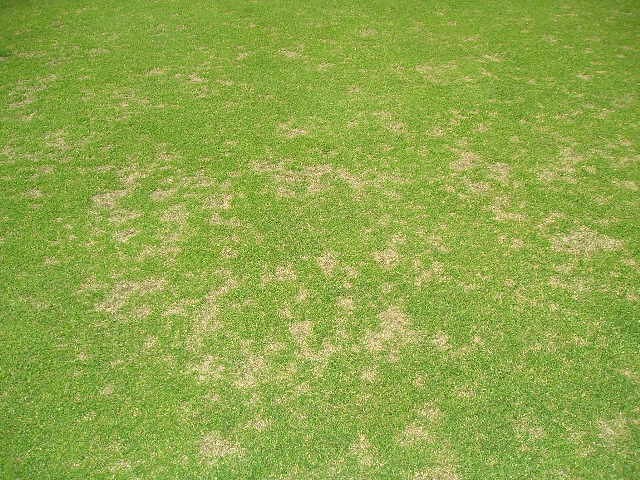
The first signs are usually small, straw-coloured patches approximately 25-50 mm across – about the size of an old silver dollar coin.
Unlike many turf diseases, these individual spots usually remain relatively small but can merge together during severe outbreaks, creating large areas of damaged turf.
During periods of warm, humid weather you may also notice white, cobweb-like fungal growth (mycelium) on the leaf surface early in the morning before the dew has dried.
If weather conditions improve and action is taken quickly, the disease may remain limited to small leaf lesions that can be grown or mown out. However, prolonged warm nights, heavy dew and continued humidity can allow the disease to spread rapidly, causing significant reductions in turf quality and playability.
Immediate Actions to Reduce Risk
While weather cannot be controlled, the environment around the leaf can.
During high-risk periods:
- Remove dew early each morning by mowing, switching or brushing.
- Irrigate early in the morning rather than late evening.
- Avoid frequent, light irrigation where possible.
- Maintain consistent rootzone moisture to minimise plant stress.
- Ensure mower blades are sharp to reduce leaf damage.
- Remove clippings from infected areas where practical.
- Avoid allowing nitrogen levels to become excessively low.
- Iron sulphate applications may help suppress disease during periods of light to moderate pressure.
- Where disease has historically been a problem, use disease forecasting models to help determine the optimum timing of preventative fungicide applications.
Always rotate fungicide chemistry to reduce the risk of resistance development. In several regions of the world, Dollar Spot populations have already shown reduced sensitivity to some fungicide groups, making resistance management essential.
Long-Term Management
Reducing disease pressure starts long before symptoms appear.
Long-term strategies include:
- Managing organic matter to reduce overwintering inoculum.
- Improving airflow by thinning surrounding vegetation.
- Increasing sunlight reaching the turf surface.
- Introducing more disease-tolerant grass species where appropriate.
- Incorporating biological products and integrated disease management practices as reliance on conventional fungicides continues to reduce.
The Take-Home Message
The current heatwave has created ideal conditions for Dollar Spot development across much of the UK and Europe.
Early identification, keeping the leaf dry, reducing plant stress and maintaining a balanced moisture programme remain the most effective ways to minimise damage.
As climate patterns continue to favour warmer, more humid summers, Dollar Spot is becoming a routine part of summer turf management rather than an occasional disease. Acting early is far easier – and far less costly – than trying to recover from a severe outbreak.